

Physical Therapy
What is Physical Therapy in Eating Disorder & Malnutrition Treatment?
According to the Physical Therapy Association of America, physical therapy (PT) is "the restoration, maintenance and promotion of optimal physical function.” Physical therapy is administered by physical therapists who help individuals by enhancing health, well-being and quality of life through movement.
PT helps patients with severe eating disorders and malnutrition address life-limiting strength and mobility issues that result from their illness by:
- Restoring physical function
- Reducing pain and discomfort
- Helping individuals engage in treatment and activities of daily life
- Improving psychological well-being
The role of movement
For many years, movement and exercise in eating disorder treatment was discouraged because it was believed to negatively impact treatment and recovery. This approach was based on the finding that as many as 80% of patients with anorexia nervosa and 55% of patients with bulimia nervosa engage in unhealthy (excessive or compulsive) exercise. Unhealthy exercise in eating disorders is a predictor of poor outcome, relapse and longer stays in inpatient treatment.
However, thoughtful, proactive engagement with physical activity in treatment for severe eating disorders has been found to have compelling benefits. A growing body of research supports the utility of health movement in eating disorder recovery.
Patients with malnutrition in hospitals are rarely treated by physical therapists, and many are told to rest to conserve calories and energy. In ACUTE’s physical therapy programming, we help patients with severe malnutrition access the benefits of PT, helping to improve strength, boost mobility and reduce pain.
Benefits of movement
-
Improved outcomes
Healthy movement results in increased treatment compliance, improved therapeutic relationship, decreased food preoccupation, decreased bulimic symptoms and decreased negative exercise behaviors with supervised exercise. -
Weight restoration
Supervised physical therapy might increase weight in anorexia nervosa patients. Aerobic exercise, massage, basic body awareness, therapy and yoga might reduce eating pathology in patients with anorexia and bulimia nervosa. -
Restoring the body
Exercise and physical therapy help restore body and self in patients, including positive changes in posture, flexibility, muscle tension and respiration, and possibly having secondary benefits like increased concentration, mental awareness and improved endurance of psychological stressors. -
Incorporating movement
Healthy movement can be incorporated into the treatment regimen for patients living with eating disorders or experiencing malnutrition. -
Body mechanics
Physical therapists incorporate movement programs in sessions, focusing on spinal mobility and muscle strength to help improve the forward head and neck posture that can be common in patients with eating disorders and malnutrition. Movement is used as a tool to help patients reconnect with their body to improve body mechanics, proprioception and interoception. -
Low intensity and short stretching exercises
Because high intensity exercise can lead to injury to muscles or bones, physical therapists focus on lower intensity movement. Once cleared from PT, most patients are given gentle stretching and strengthening programs they can do daily to help with digestion, flexibility and overall strength alongside nutritional rehabilitation.
FAQ: Will I be on bed rest if I'm hospitalized for an eating disorder?
Traditionally, patients hospitalized with severe eating disorders or malnutrition, but bed rest can cause the body to become deconditioned; so even after nutritional rehabilitation and medical stabilization, they lack the physical strength and mobility to step down to a lower level of care and meaningfully engage in treatment.
In any treatment setting, patients would be expected to rest and reduce activity, particularly if they have a history of excessive exercise. However, physical activity should be individually assessed, prescribed and supported during treatment.
What to expect from physical therapy
Assessment
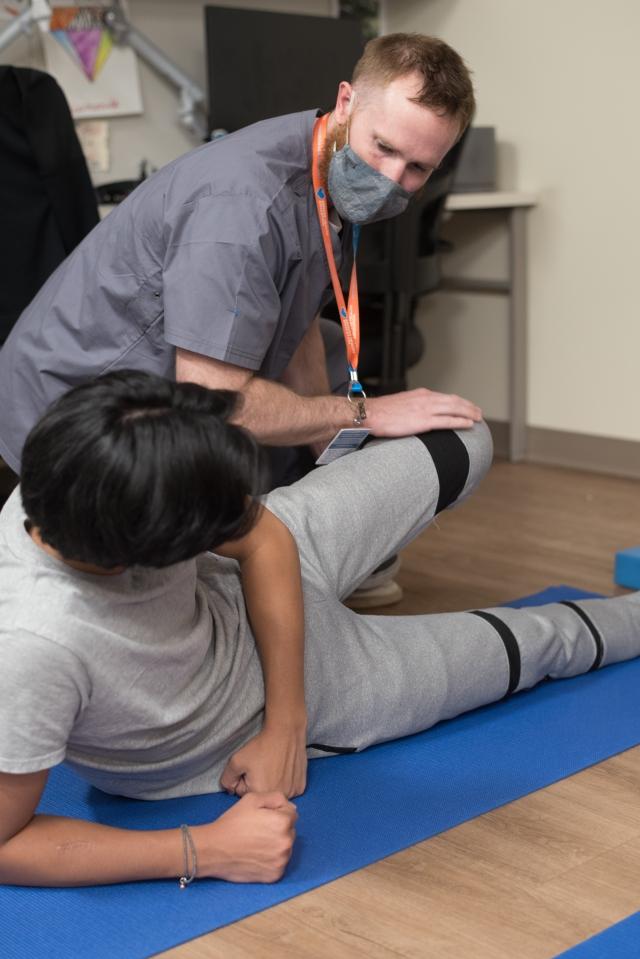
Upon admission, the patient meets with a dedicated physical therapist specializing in eating disorders. Together, physical therapist and patient discuss fall history, current functional mobility, pain and goals for treatment. The physical therapist may also inquire about exercise behaviors in eating disorder patients using the Compulsive Exercise Test.
Understanding the role of exercise and movement in their eating disorder is helpful for all patients, and can be especially valuable for athletes and athletic populations in developing a healthy relationship with exercise in recovery.
Grip strength is also assessed, which is rarely assessed in general PT settings despite grip strength’s importance in many activities of daily life like writing, driving and opening doors.
Education
Learning about body mechanics, posture, strength and movement is an essential component of physical therapy. Recent estimates suggest 90% of adult patients with anorexia nervosa have osteopenia. Patients with severe and prolonged malnutrition can also impact bone mineral density. While this can improve with weight restoration, nutritional rehabilitation and medication, they do not completely resolve emphasizing the importance of education regarding body mechanics.
Physical therapists will also engage patients in discussion regarding quality and quantity of movement, supporting appropriate movement parameters long-term and short-term, like when returning to sport or discharging to a lower level of care.
Skilled Interventions
Healthy movement protocols are customized to support physical function and psychological well-being. Movement programs address musculoskeletal impairments and allow patients to feel their bodies get stronger in the setting of improved nutrition. The change of scenery that PT brings may be welcome and motivating for patients who receive room-based treatment.
Interventions address the full spectrum of physical challenges, including:
- Neuromuscular reeducation to facilitate increased efficiency and use of diaphragm, transverse abdominis, and pelvic floor musculature to support posture, core stabilization and continence
- Training to foster safe and effective transfers
- Walking to improve intestinal motility, promote lung clearance, minimize deleterious effects of bed rest and support skin integrity
- Gait training and stair training
- Balance interventions
- Kinesiotape, soft tissue massage, foam roller and functional dry needling for pain relief
- Pet therapy to positively affect pain, respiration and mood state and improve range of motion